
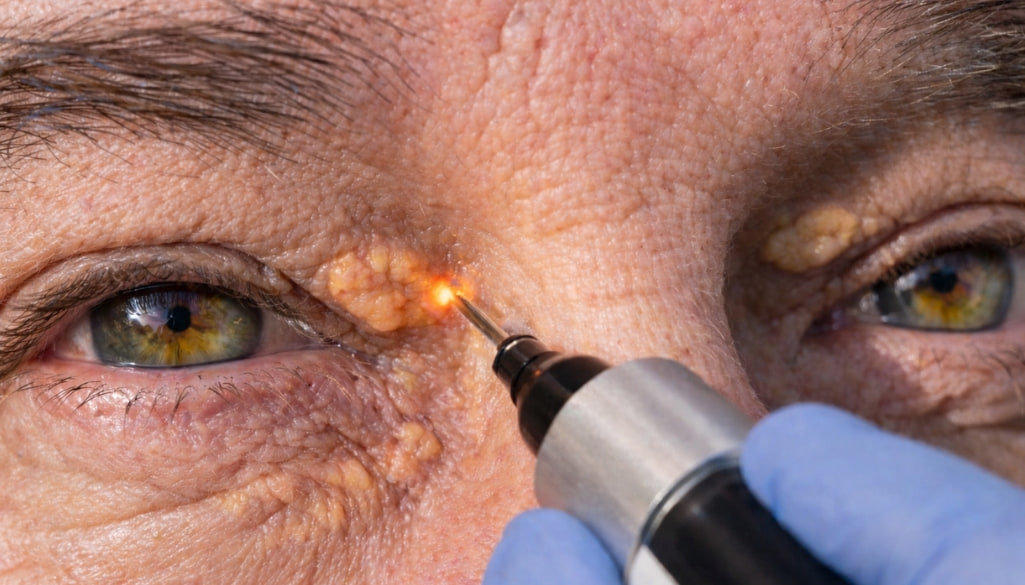
Xanthelasma is a visible skin condition in which yellowish, cholesterol-rich deposits develop around the eyelids, particularly near the inner corners of the eyes. Although these patches are generally harmless, they can become a cosmetic concern because of their prominent location. A suitable clinic should provide a thorough consultation before recommending any removal technique. Depending on the size, thickness, location, and number of lesions, a qualified practitioner may consider options such as laser treatment, electrosurgery, chemical methods, or surgical excision. Not every approach is appropriate for every patient, particularly when lesions are close to the eye. Choosing the right clinic for Eyelid Xanthelasma Removal in Dubai therefore involves more than simply looking for a treatment provider. The procedure requires careful assessment of delicate eyelid skin, appropriate treatment selection, and attention to both appearance and safety.
Patients should also look beyond promotional claims when comparing aesthetic and dermatology clinics. Relevant clinical experience, practitioner qualifications, treatment technology, hygiene standards, consultation quality, and realistic discussions about potential outcomes are all important considerations.
Several established clinics may be considered when researching treatment options. The following providers offer different approaches and clinical environments, allowing patients to compare their services before arranging a consultation.
Aesthetics International
Aesthetics International is one option for individuals researching aesthetic treatments involving visible skin concerns. When considering Eyelid Xanthelasma Removal, patients should use the consultation to establish whether the practitioner routinely evaluates lesions around the delicate eye area and which removal methods may be appropriate.
A strong consultation should cover the appearance and extent of the xanthelasma, the proposed technique, possible skin reactions, healing expectations, and the potential for pigmentation or recurrence. Patients can also ask whether a dermatologist or appropriately qualified medical professional will assess the condition before treatment.
Kaya Skin Clinic UAE
Kaya Skin Clinic UAE is another name patients may encounter while researching professional skin treatments. For individuals considering xanthelasma removal, the priority should be determining whether the clinic can provide an appropriate assessment of the eyelid lesions and explain the available treatment pathways.
A consultation should not focus solely on removing the visible deposit. The practitioner should consider its location, depth, skin type, previous treatments, and the possibility of pigmentation or scarring. Clear communication about realistic outcomes can help patients make an informed decision rather than choosing a procedure based only on its advertised benefits.
Dynamic Life Clinic
Dynamic Life Clinic may also be considered during the process of comparing clinics for aesthetic skin concerns. Patients interested in Eyelid Xanthelasma Removal should evaluate the clinic according to clinical suitability rather than relying solely on treatment availability.
The most useful questions involve practitioner credentials, experience with periocular treatments, the equipment or technique being proposed, and how potential complications are managed. A professional clinic should also explain when another medical specialist may be more appropriate, particularly if the appearance of a lesion is unusual or its diagnosis has not been established.
Tajmeels Clinic
Tajmeels Clinic provides another option for patients researching aesthetic treatment providers. When assessing a clinic for eyelid xanthelasma, patients should pay particular attention to the quality of the initial consultation and whether the proposed treatment is tailored to the individual rather than presented as a universal solution.
Because xanthelasma can vary considerably in size and thickness, treatment selection should be based on the specific lesion. Patients can ask how the clinic approaches delicate areas around the eyes, what type of practitioner performs the procedure, and what outcome can reasonably be expected.
Enfield Royal Clinic
Enfield Royal Clinic can be considered by patients looking for a clinic where an aesthetic concern such as Eyelid Xanthelasma Removal can be assessed before a treatment plan is selected. Because the eyelids contain particularly delicate skin, the consultation is an important part of determining whether treatment is suitable and which technique may offer an appropriate balance between lesion removal and preservation of surrounding skin.
Patients should ask about the practitioner’s relevant qualifications, experience with lesions around the eyes, treatment technology, and expected healing process. It is also useful to discuss whether the lesion requires medical assessment before cosmetic treatment and what factors could influence the final appearance.
How to Choose the Right Clinic for Eyelid Xanthelasma Removal
Experience and Qualifications
The experience and qualifications of the treating practitioner should be among the first considerations. Xanthelasma appears on a sensitive anatomical area, so knowledge of eyelid anatomy and appropriate treatment techniques matters.
Patients should verify the practitioner’s professional credentials and ask about experience with similar lesions. It is also reasonable to ask whether the practitioner performs the treatment personally and how frequently they manage conditions affecting the eyelid area.
Technology and Techniques
There is no single removal method that is ideal for every case. Depending on the lesion and clinical assessment, possible approaches can include laser-based treatment, electrosurgical techniques, chemical treatment, or surgical removal.
A reputable clinic should explain why a particular method is being considered rather than presenting technology as the main selling point. Patients should understand the expected number of sessions, healing process, limitations, and possible complications before proceeding.
Safety Standards
Safety is especially important when treatment takes place close to the eyes. The clinic should maintain appropriate hygiene and infection-control procedures and use equipment suitable for the intended treatment.
Patients should also be informed about potential risks, including irritation, pigmentation changes, scarring, incomplete removal, or recurrence. Any history of previous eyelid procedures or relevant skin concerns should be discussed during the consultation.
Consultation Process
A detailed consultation can distinguish a clinically responsible treatment plan from a purely cosmetic sales approach. The practitioner should examine the lesions, discuss medical history where relevant, and determine whether the appearance is consistent with xanthelasma.
Patients should feel comfortable asking questions about the diagnosis, technique, expected results, healing, and alternatives. If there is uncertainty about the diagnosis, further medical evaluation may be appropriate before cosmetic removal.
Patient Experience
A professional patient experience involves clear communication from consultation through treatment planning. Information should be understandable, realistic, and free from promises of guaranteed results.
Patients can also assess whether the clinic takes sufficient time to explain the procedure and whether questions are answered transparently. These factors can be valuable indicators when comparing providers.
Expected Results
The objective of treatment is generally to reduce or remove the visible deposits while limiting unwanted effects on the surrounding skin. However, results can vary according to lesion characteristics, treatment method, individual healing, and the possibility of recurrence.
A responsible practitioner should discuss realistic expectations rather than suggesting that removal will necessarily produce a permanent result.
Frequently Asked Questions
What is eyelid xanthelasma?
Xanthelasma refers to yellowish plaques caused by deposits of lipid-rich material in the skin, commonly occurring around the eyelids. They are usually benign but may be removed for cosmetic reasons.
Is Eyelid Xanthelasma Removal safe?
Treatment can be performed safely when an appropriate technique is selected and carried out by a suitably qualified practitioner. Because the lesions occur close to the eyes, careful assessment and technique are particularly important.
Which treatment is best for xanthelasma?
There is no universally best method. Laser treatment, electrosurgery, chemical techniques, and surgical excision may each have a role depending on the size, thickness, location, and characteristics of the lesion.
Can xanthelasma come back after removal?
Yes. Removal addresses the existing visible deposits but does not necessarily prevent new xanthelasma from developing. Recurrence can occur, which is why patients should discuss long-term expectations during consultation.
How should a clinic be selected for xanthelasma treatment?
Patients should consider practitioner qualifications, relevant experience, treatment options, safety protocols, consultation quality, and realistic discussion of results. The clinic should also be able to explain why a particular technique is suitable for the individual’s eyelid lesions.
Conclusion
Choosing the right clinic for Eyelid Xanthelasma Removal requires careful consideration of clinical expertise, treatment methods, safety standards, and consultation quality. The most suitable provider is not necessarily the one offering the most aggressive treatment or making the strongest promotional claims. Instead, patients should look for a qualified practitioner who evaluates the lesions carefully, explains appropriate options, discusses potential risks, and sets realistic expectations.
Because the eyelid is a delicate area, informed decision-making is essential. Comparing clinics, asking detailed questions during consultation, and ensuring that the diagnosis and treatment approach are appropriate can help patients approach xanthelasma removal with greater confidence.